
Posted 28th April 2008 | No Comments
Friend of the railway, the political giant with a heart of gold
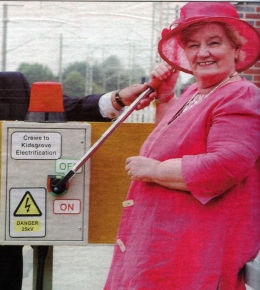
TRIBUTES paid following the sudden death of Commons transport committee chairman Gwyneth Dunwoody have highlighted how the railway industry has lost a true friend.
Senior figures from the political world and the rail industry noted that the outspoken Labour MP, described affectionately as “a battleaxe in the best tradition” was a constant voice of support.
The fact that her constituency included the railway town of Crewe may have been a factor, and her 11-year spell as committee chairman – she always insisted on ‘chairman’ and had no truck with political correctness – provided many examples.
She was fearless when it came to holding to account ministers, senior railway officials and others who came before her, no matter how rich and powerful.
And she could be just as sharp with journalists who displeased her, especially if she felt they had not read Transport Committee reports in full before asking her questions.
But while her reputation for not suffering fools gladly was well deserved, she never held
a grudge, and even those who felt the rough edge of her tongue tended to be fond of her.
Although she was 77, her death on 17 April after a short illness was a shock, as she had been in typically robust form just weeks before and was heavily involved in her committee’s report on Ticketing and Concessionary Travel on Public Transport, published at the start of April.
There was a softer side to her, too, seen in her collection of teddy bears and her headline-grabbing attempt to secure the return of the original Winnie the Pooh dolls from behind bullet-proof glass in New York Public Library.
She had “detected sadness” in their display and that involved clashing with the Big Apple’s zero tolerance Mayor, Rudolph Giuliani.
Mrs Dunwoody, an Aslef member, was in more typical hard-hitting form earlier this year when her committee heard evidence about the Christmas and New Year engineering over- runs at Rugby and Liverpool Street from industry high-fliers, including Network Rail chairman Sir Ian McAllister.
His recent knighthood offered him no protection as she interrogated him as to why he had not been seen at company headquarters during the fiasco, or made any statements.
However, her sometimes ferocious questions were always underpinned by a desire to get the best for railway passengers and staff, and she was always concerned for the success of the network.
In an article reported by Railnews in March, she warned that relentless, above-inflation fare rises would drive passengers away, and condemned the lack of a link between performance and prices.
The first major rail story since her death was the shake-up of rail fares, and while we can never know her views, we can be sure she would have expressed them honestly and plainly, without caring who
she upset.
The industry will hope that her successor is half as fearless and independent.