
Posted 22nd July 2026
Trains slow down after long dry spell

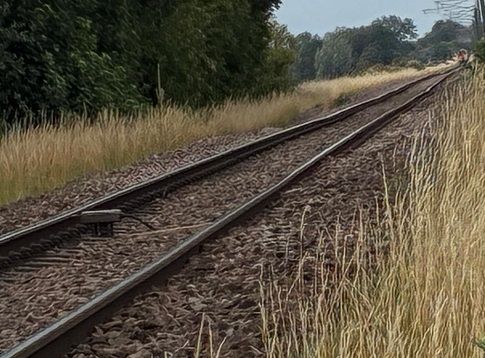
Network Rail has imposed speed restrictions on some lines in the east of England, after prolonged dry weather caused the soil under the railway to shrink.
Engineering work to repair the uneven railway which results will be causing some timetable changes from early August.
King’s Lynn trains will be four minutes later arriving and leaving four minutes earlier than before from 3 August, so allowing more running time between there and Ely.
Similar work to set to affect services from London to Southend Victoria, Wickford and Southminster routes, where buses will replace some trains after 22.45.
On Thursdays after 23.30, some services between London and Colchester will have their journey times extended by up to six minutes. There will also be some changes to late night services on c2c to Southend Central and Shoeburyness, while Elizabeth Line services to Shenfield will also be reduced east of Gidea Park between 23.00 and midnight.
Network Rail has warned that more speed restrictions may prove to be necessary in the near future, and the situation is being monitored closely.
Network Rail Anglia infrastructure director Joe Kennedy said: ‘We’re taking action to keep running the best possible service despite the significant challenges we’re again facing this summer with our peat and clay soils. Our teams across Anglia will continue to work hard to minimise the impact on passengers, but we’re really sorry for the disruption caused by the service changes. Thank you to everyone for bearing with us.’
Great Northern’s customer service director Jenny Saunders added: ‘We know many passengers will feel disappointed by further timetable changes after the challenges experienced on this route in recent weeks. I am sincerely sorry for the impact this will have on your journey; we do not take that inconvenience lightly.
‘These necessary speed restrictions mean we need to make temporary changes to the timetable between King’s Lynn and Cambridge from 3 August. While we regret having to make these changes, they are necessary to help prevent delays building up throughout the day and to provide a more reliable service.
‘Our teams will continue working closely with Network Rail to minimise the impact and return to the normal timetable as soon as conditions allow.’
A drought last summer meant reductions in train services were necessary on the South Western main line, where the extremely dry conditions had caused clay embankments between Gillingham and Axminster to shrink, a problem known as ‘Soil Moisture Deficit’. Because much of the route between Salisbury and Exeter St Davids was singled many years ago by British Rail, the slower trains could not pass each other at the usual places, so an emergency timetable with fewer trains was introduced on late July and trains could not call at Crewkerne for two weeks. Full services on the route could not be restored until 29 November.
What do you think? Click here to let us know.