
Posted 5th January 2026
Public or private: which is better?
5 comments
This year is going to be an important one for the railways. More former franchises are to be renationalised soon: the next will be West Midlands Trains on 1 February, to be followed by Govia Thameslink Railway on 31 May.
Because WMT and GTR both had more than one brand, these two renationalisations will mop up not two but six operators as far as the public is concerned, and by 1 June the programme of returning the passenger railway to the public sector in preparation for Great British Railways will have passed the half way mark.
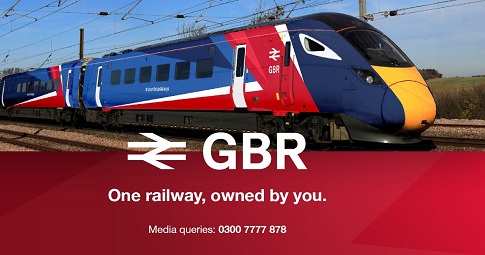
GBR itself is also making progress, because the Railways Bill is now at committee stage in the House of Commons, having been debated in Second Reading on 8 December, and it is hoped that the Bill will have received Royal Assent by the summer.
These moves mark a handover from the private to public sectors, and go quite some way towards reversing the privatisation of the railways in the early and mid-1990s.
The reverse is only partial, because most rail freight and the businesses of building and leasing rolling stock will still be in private hands, along with at least some heavy maintenance.
But as Network Rail was effectively renationalised from when it was set up in 2002, and became officially publicly-owned in 2014, the return of nearly all the passenger railway to the public sector after 30 years of privatisation will be a significant event.
The private sector open access passenger operators will continue – at least for now. The government has promised to respect their existing track access contracts, although the Railways Bill does provide for them to be terminated early if the Secretary of State chooses to do so, with potential compensation also provided for.
What the Bill does not do is provide any comfort for further open access operators, a number of whom have been turned down since 2024.
At this point we can try to compare the merits of a public railway with those of a private one.
The big argument in favour of a directing mind is that many aspects of the railway’s service will become consistent, and therefore easier for passengers to understand. These details include such things as a single website for planning journeys and, if wished, buying tickets, along with a standard layout on the screens of ticket vending machines and a uniform design for printed publicity, including timetable booklets. Behind the scenes, our directing mind will bring together track and train, so that many industry decisions will be taken by a co-ordinated group of people rather than by more than a dozen separate groups, some of whom may have conflicting agendas. Since many internal conflicts cost money, their abolition should reduce railway costs.
We may remember that it was exactly a lack of co-ordination which was blamed for the disruption following the introduction of the May 2018 timetables, particularly on Govia Thameslink Railway and Northern, and which was followed by the comprehensive review of the industry’s structure carried out by Keith Williams. In spite of the change of government in 2024, his recommendations are now becoming a reality, at least to some extent, although he had felt that franchises should be replaced by private sector concessions, which give the operators much less commercial freedom than franchises but would have kept the private sector on the rails.
One problem with the private model is that there is a lack of consistency, as far as the railway’s face is concerned. A passenger accustomed to buying tickets from vending machines run by Avanti West Coast may have to pause for a moment when faced with machines operated by Govia Thameslink Railway or Greater Anglia. For instance, some operators allow tickets to be bought from a variety of starting points, while others insist that the journey must begin at the station where the machine is installed, while each operator has had its own rules about when ‘off-peak’ actually starts each morning.
The whole business of charging for travel is monstrously complicated, and has given rise to such nonsenses as ‘ticket splitting’, which would not have been out of place when Lewis Carroll’s Alice travelled by train [‘ “If you had bought another ticket when we reached the last white square, you would have saved at least half a crown by now,” the Guard told Alice. “Half a crown, half a crown,” chorused the other passengers. “She ought to get off the train now, and walk the rest of the way.” ’]
On the other hand, the private sector may be able to attract more innovative managers, and other staff may also feel more enthusiastic about working for the private sector. Indeed, they can buy shares in the relevant owning group.
Perhaps GBR could have used its powers to reduce the inconsistencies even if the private sector was still running National Rail concessions, but the process would not have been so straightforward.
Meanwhile, the open access operators are still there and seem set to stay for some time at least, in spite of the Railways Bill. It remains to be seen how our future ‘public/private railway’ will work out in practice, and what the contribution made by open access will really be worth. Will it abstract an unacceptable proportion of revenue, or provide valuable additional services?
Readers’ comments
British Rail was far more efficient than the private companies. Having spent practically a lifetime working in the rail industry I can categorically say If BR had not been asset stripped and had received the same amount of taxpayers’ subsidies the private companies received today we would have a rail network on par with the rest of Europe.
Tim Comer, Cornwall
The railway should never have been privatised in the first place. Just before privatisation BR had made many improvements in efficiency, reliability and finance, and should have been given the chance to see it through.
Ian Rutherford, Paisley
My biggest concern would be the 'slow down of innovation'. For all these years, the workforce in the private sector have now got very used to the incentivisation for bringing innovation and efficiencies. The question is what measures GBR will take to continuously nurture this innovative mindset within the same workforce moving into the public sector. To improve the services and most importantly to bring fares down at the equivalent levels in the wider developed countries, the innovation would have to go beyond the rationalisation and consistencies around some of the obvious areas currently seen. Railways have a big role to play in reducing the travel carbon footprint and hence we need to attract more people from cars into the trains between cities.
Vishwas Pahariya, London
My only divergence from this would be to regard the dividing line between private and public sector to be defined by whether a particular operation is a ‘captive market’ natural monopoly or not. Such operations tend to be shorter distance ,commuter, suburban or regional services, where effective competition is not feasible; these need to be public sector, probably within a City region, and having a democratic mechanism for governance. This leaves intercity longer- distance free enterprise, market force based operations. Such approaches already have proved positive in the Aviation and Bus industries. Fitting in with the above is the question of subsidy. Economists talk of markets having ‘externalities’, i.e. ‘hidden’ costs and beneits that exist but are left out of the interplay of market force. Subsidy/charges to rectify these would be welcome. Also, it ought not to be difficult to have a modern, high-tech version of the prewar ‘clearing house’ for network-wide fares.
David C. Smith, Bletchley
[I am not sure that the bus and airline industries are good examples. Private sector buses are now widely acknowledged to have failed, which is why franchising is being introduced in places like Manchester. Meanwhile, airlines can cherrypick their markets, and introduce or withdraw services at a few weeks’ notice. Incidentally, a ‘Railway Clearing House’ has existed since privatisation 30 years ago. It is called Rail Settlement Plan, and run by ATOC, which is part of the Rail Delivery Group.--Ed.]
There are a number of reasons for supporting free enterprise for some types of service, some alluded to by the letter regarding innovatory management. It would also seem better for such innovation to be a result of managements responding to their national incentivisations, rather than government imposing its wishes, reducing the TOCs to just ‘following orders’. The staff at the DfT would probably be most suited to creating a structure of subsidy for the TOCs. As for air and road public transport, parts of these have opened up value for money services that didn't exist before.
David C. Smith, Bletchley
[I won’t argue further, having made my point, except that I should perhaps add that individual TOCs are a relic of franchising and seem unlikely to survive under GBR. In February last year, the transport secretary said: ‘We will end the days of inefficiency and competing interests; consolidating functions currently spread across Network Rail, the Department for Transport, and 14 separate rail operators into a single organisation with a single, cohesive strategy’. More recently, the former Southeastern operator has already been merged with Network Rail Kent under unified management, as a first step towards GBR.--Ed.]
What do you think? Click here to let us know.