
Posted 6th July 2008 | 1 Comment
Air France-KLM looks to transfer flights to rail
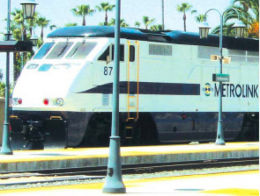
Intercity transportation, Montesson (France)
WHILE arguments continue in Britain about whether high-speed rail would be better than a third runway at Heathrow airport, Air France-KLM is looking into replacing some of its short-haul European flights with high-speed rail services.
The Franco-Dutch airline, Europe’s biggest airline, has confirmed reports in French and British newspapers that it is discussing a high-speed rail alliance with Veolia — a French utility that runs many rail operations world-wide, some under the Connex brand, but is not yet active in high-speed travel.
“Air France and Veolia Transport are looking at the possibility of concluding a strategic partnership that would lead to the emergence of a new player in European high-speed rail,” Brigitte Barrand, of Air France, said.
Another Air France-KLM spokesperson said: “As part of the opening to competition of [European] rail transport in 2010, Air France and Veolia are looking into the possibility of a partnership to create a new high-speed rail player on the European scene.”
Veolia Transport, part of French water utility Veolia, could run trains under the Air France brand from the airline’s hub at Paris Charles de Gaulle airport to destinations across Europe, the Financial Times reported.
The move could mark the beginning of a decline in short-haul air travel on routes such as Paris-Frankfurt, which now enjoy good high-speed rail links, the paper said.
Air France has been exploring for four years the possibility of using rail to complement its air services.
Veolia runs passenger and freight rail services in 27 countries and transports more than two billion passengers annually, according to the company’s web site.
The International Herald Tribune quoted Kepler Equities analyst Pierre Boucheny saying the benefits for Air France would be improved customer service — thanks to faster transport times and fewer hassles during connections — and lower costs.
Exane BNP Paribas’ Nick Van den Brul predicted in the Herald Tribune that “a lot of short haul flights are going to become redundant over the next five to ten years.”
The main advantage for the airlines would be improved profitability, Van den Brul said.
“More than half of all flights are connections, and in effect long-haul is where the value is. Short haul is just way for Air France to get passengers to Charles de Gaulle airport in Paris,” Van den Brul said.
Moving passengers onto trains from planes would result in “significant” cost savings, a particular concern for airlines struggling to cope with record high oil prices.
Energy accounts for about 40 percent of an airline’s total costs, against only around 10-15 percent for rail.
Reader Comments:
Views expressed in submitted comments are that of the author, and not necessarily shared by Railnews.
Paul Davis, Birmingham, england
Horizontal integration by the airlines enables them to begin to mount a strategic response to the significant reputation damage that climate change concern has cuased to them over the past five years. The International Herald Tribune has recently carried articles on the radically uneconomic pricing structures of intra- European (and especially UK-originating) flights. Joint venture rail-air consortia offer a strategic response to this and place UK cheap cost airlines at a potentially grave medium term disadvantage. It would be ironic if the UK Givernment's current civil aviation 'predict-and-provide' policy were indirectly to worsen UK airlines' competitiveness in the long run by enabling them to avoid the strategic reappraisal undertaken by Air France-KLF.